
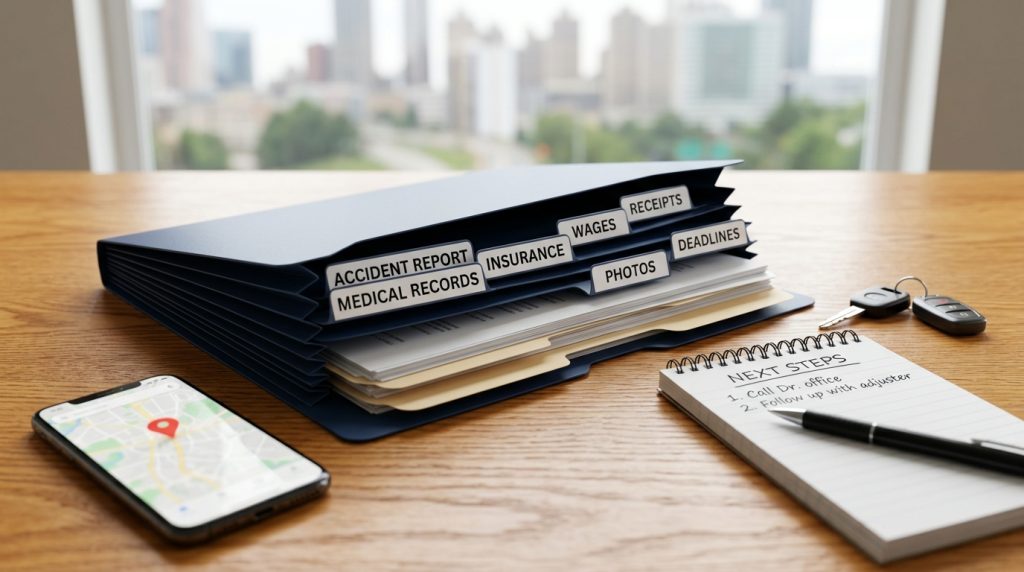

After an accident in Atlanta, it can be hard to know what matters most. Medical appointments, insurance calls, missed work, pain, transportation issues, and repair problems can all happen at once. A clear resource plan can help injured people stay organized, avoid rushed decisions, and better understand what may be needed if a personal injury claim becomes necessary.
Quick Answer
After an accident in Atlanta, start by getting medical care, reporting the incident when appropriate, saving evidence, organizing insurance information, tracking expenses, and keeping notes about symptoms and daily limitations. Important resources may include medical records, police or incident reports, photos, witness details, insurance letters, repair estimates, wage records, receipts, and Georgia legal deadline information.
If the injury caused medical bills, missed work, disputed fault, insurance delays, or long-term symptoms, speaking with an atlanta ga personal injury lawyer may help you understand what evidence matters, what deadlines may apply, and how to evaluate the next steps. People looking for local profile details can also review the Thompson Law Atlanta business listing for map access and location information.
Key Takeaways
- A strong personal injury claim usually depends on documentation, not memory alone.
- Useful resources may include medical records, report numbers, photos, witness details, insurance messages, wage records, receipts, and recovery notes.
- Atlanta injury claims may involve car accidents, truck crashes, rideshare incidents, pedestrian injuries, motorcycle wrecks, bicycle accidents, unsafe property conditions, negligent security, or wrongful death cases.
- Insurance companies may review fault, medical treatment, statements, prior injuries, treatment gaps, and available coverage before making an offer.
- Georgia personal injury claims are time-sensitive, so evidence preservation and legal deadlines should be addressed early.
Why Personal Injury Resources Matter in Atlanta
Atlanta is a busy metro area with commuter traffic, rideshare activity, airport routes, commercial vehicles, pedestrians, cyclists, delivery drivers, apartment communities, restaurants, hotels, retail centers, and construction activity. Accidents may happen on I-285, I-75, I-85, I-20, the Downtown Connector, Peachtree Street, Memorial Drive, Piedmont Avenue, Northside Drive, parking lots, sidewalks, MARTA-adjacent areas, rideshare pickup zones, and neighborhood streets.
The Atlanta Department of Transportation’s Vision Zero program focuses on reducing traffic fatalities and serious injuries through safer roadway planning and safety strategies. For injured people, that local safety context connects to a practical reality: one accident can affect health, income, transportation, family responsibilities, and long-term stability.
Personal injury resources matter because every part of a claim may depend on records:
- Medical records explain the injury.
- Photos and videos help show what happened.
- Witness details may support fault.
- Insurance letters show claim activity.
- Wage records document missed work.
- Receipts help prove out-of-pocket costs.
- A recovery journal can explain daily limitations.
The goal is simple: create a clear record before details disappear.
Resource 1: Medical Records and Treatment Notes
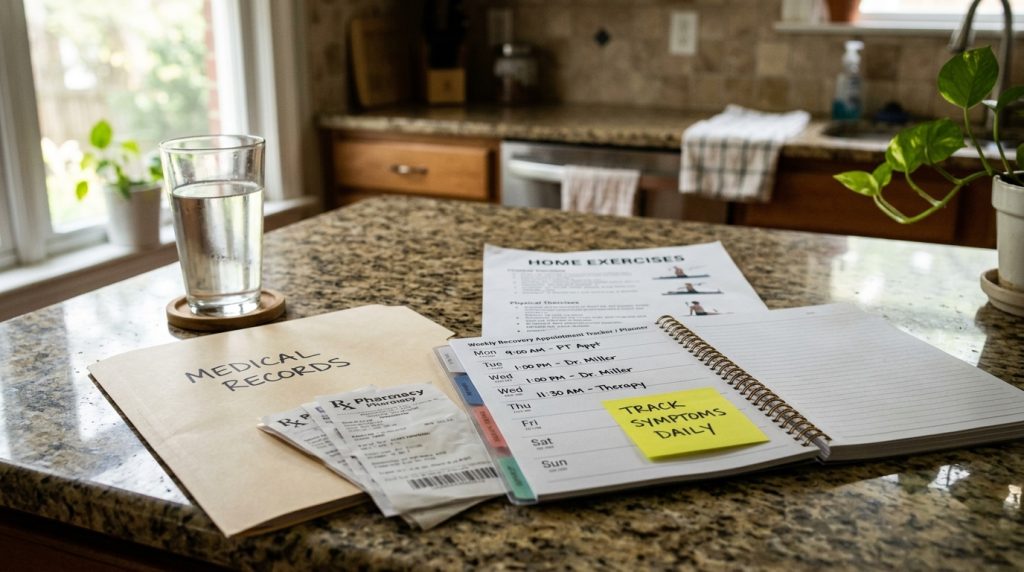
Medical documentation is one of the most important parts of a personal injury claim. It helps show when symptoms began, what injuries were diagnosed, what treatment was recommended, and whether future care may be needed.
Save records from:
- Emergency rooms
- Urgent care clinics
- Primary care doctors
- Specialists
- Imaging centers
- Physical therapy providers
- Rehabilitation providers
- Pharmacies
- Mental health providers, when relevant
- Surgical providers, when relevant
Also save:
- Medical bills
- Explanation of benefits forms
- Prescription receipts
- Discharge instructions
- Work restriction notes
- Referral paperwork
- Follow-up appointment summaries
Insurance companies often look closely at treatment timelines. If there are long gaps in care, missed appointments, or unclear records, the insurer may argue that the injury was not serious or was not related to the accident.
Resource 2: Accident Reports and Incident Records
The type of report depends on how the injury happened.
For a motor vehicle crash, police may respond and prepare a crash report. For an injury at a store, apartment complex, hotel, parking garage, restaurant, workplace, or event venue, there may be an incident report. For a work-related injury involving a third party, employer or contractor records may also matter.
A report may help document:
- Date and time
- Location
- Parties involved
- Vehicle or property details
- Witnesses
- Reported injuries
- Initial statements
- Officer or manager observations
For traffic-related context, the Georgia Department of Transportation’s Crash Data Dashboard provides crash data for Georgia public roads. A dashboard is not a substitute for a case-specific police report, but it can help show why roadway documentation matters in Georgia injury cases.
Resource 3: Photos, Videos, and Scene Evidence
Evidence can disappear quickly. Vehicles are repaired, hazards are cleaned up, debris is removed, surveillance footage is overwritten, and witnesses become harder to contact.
If it is safe, collect or preserve:
- Photos of the accident scene
- Photos of visible injuries
- Photos of vehicle damage
- Photos of property hazards
- Photos of traffic signs, signals, lighting, or road layout
- Videos of the surrounding area
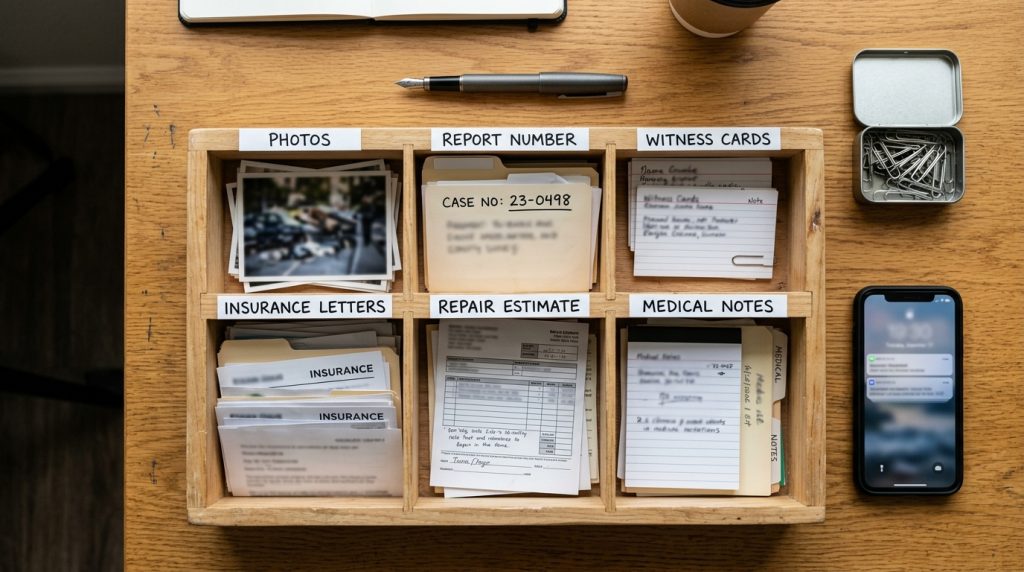
- Witness names and phone numbers
- Police or incident report numbers
- Dashcam footage
- Surveillance footage
- Repair estimates
- Damaged property
- Notes about weather, lighting, and road conditions
If the accident happened at a business, apartment complex, hotel, parking garage, restaurant, retail store, warehouse, or entertainment venue, ask early whether surveillance footage exists. Many systems do not keep video for long.
Resource 4: Insurance Claim Information
Insurance communication can become confusing quickly, especially when multiple companies are involved.
Depending on the accident, you may hear from:
- Your own insurance company
- Another driver’s insurer
- A rideshare insurance representative
- A commercial vehicle insurer
- A property insurer
- A business liability insurer
- A claims administrator
- A repair or total-loss representative
The Georgia Office of Commissioner of Insurance provides insurance claim tips, including guidance to understand policy terms, file claims promptly, and provide complete and correct information.
Save:
- Claim numbers
- Adjuster names
- Phone numbers
- Email addresses
- Insurance letters
- Settlement offers
- Medical authorization forms
- Recorded statement requests
- Repair estimates
- Rental car communications
- Denial letters
- Payment explanations
Keep a short log of every insurance call. Include the date, time, person’s name, company, phone number, and what was discussed.
Be careful before giving broad statements, signing medical authorizations, or accepting a settlement before the medical picture is clear.
Resource 5: Lost Income and Work Records
A personal injury claim may involve more than medical bills. If the injury affects your ability to work, income documentation can become important.
Save:
- Pay stubs
- Timesheets
- Employer letters
- Missed-shift confirmations
- Work restriction notes
- Tax records
- Contractor invoices
- Freelance project records
- Business income records
- Notes about reduced hours or changed duties
Lost income records may be especially important for hourly workers, rideshare drivers, delivery drivers, contractors, small business owners, freelancers, caregivers, and people with variable schedules.
If the injury affects your ability to work long-term, future earning capacity may also become part of the claim.
Resource 6: Out-of-Pocket Expense Records
Accident-related expenses often appear in small amounts that add up over time. Saving receipts can help show the financial impact of the injury.
Track:
- Prescription costs
- Medical devices
- Braces or supports
- Transportation to appointments
- Parking fees
- Rideshare costs
- Rental car costs
- Towing fees
- Vehicle storage fees
- Childcare needed for appointments
- Home assistance
- Replacement personal property
- Mobility aids
- Over-the-counter medical supplies
A simple envelope, folder, or digital receipt album can make this easier.

Resource 7: A Recovery Journal
A recovery journal can help explain how an injury affects daily life. It does not need to be emotional or lengthy. Short factual notes are often enough.
Track:
- Pain levels
- Sleep problems
- Headaches
- Dizziness
- Mobility limits
- Medication side effects
- Missed work
- Missed family events
- Difficulty driving
- Difficulty lifting, standing, walking, or sitting
- Medical appointments
- Changes in symptoms
- Emotional stress or anxiety after the accident
This type of record can be useful when injuries are not visible. Pain, fatigue, reduced mobility, anxiety, and loss of normal activities may be difficult to explain months later without notes.
Common Atlanta Personal Injury Claim Scenarios
Car Accident Claims
Car accident claims may involve distracted driving, speeding, impaired driving, failure to yield, unsafe lane changes, rear-end crashes, intersection collisions, uninsured drivers, or multi-vehicle crashes.
Truck Accident Claims
Truck accident claims may involve driver logs, inspection records, cargo documents, maintenance records, company safety policies, GPS data, dispatch records, and multiple insurance companies.
Rideshare Accident Claims
Rideshare claims may involve insurance questions based on whether the driver was offline, waiting for a ride request, traveling to pick up a passenger, or actively transporting someone.
Motorcycle Accident Claims
Motorcycle claims may involve blind spots, unsafe turns, failure to yield, road hazards, distracted drivers, or unfair assumptions about riders.
Pedestrian and Bicycle Injury Claims
Pedestrian and bicycle claims may involve crosswalks, signals, lighting, visibility, road design, driver distraction, transit stops, and nearby surveillance footage.
Unsafe Property Claims
Unsafe property claims may involve wet floors, uneven walkways, broken stairs, poor lighting, falling merchandise, unsafe parking lots, negligent security, or hazards without warning signs.
Wrongful Death Claims
When an accident causes a fatal injury, surviving family members may have legal rights. These claims are sensitive and may involve funeral expenses, lost support, and loss of companionship.
Resource 8: Georgia Legal Deadline Information
Georgia personal injury claims are controlled by legal deadlines. In many cases, actions for injuries to the person must be brought within two years after the right of action accrues under Georgia Code Section 9-3-33.
That does not mean an injured person should wait. Evidence may disappear, witnesses may become harder to locate, insurance negotiations can take time, and some claims may involve shorter notice rules, especially if a government vehicle, public employee, or public entity is involved.
Georgia law can also reduce or bar recovery according to a person’s percentage of fault under Georgia Code Section 51-12-33. This is why evidence can be especially important when fault is disputed.
How Insurance Companies May Evaluate a Claim
Insurance companies review claims based on liability, damages, coverage, documentation, and risk.
An adjuster may consider:
- Who appears to be at fault
- Whether the accident was reported
- Whether photos or video exist
- Whether witnesses support the claim
- Whether medical care began quickly
- Whether treatment was consistent
- Whether the injured person had prior injuries
- The amount of medical bills
- Lost wage documentation
- Property damage or repair estimates
- Available insurance coverage
- Statements made by the injured person
- Whether more than one party may share fault
Insurance companies may also argue that the injury was pre-existing, treatment was delayed, the accident was minor, or the injured person shares responsibility. Organized records can help respond to those arguments.
When Legal Guidance May Be Useful
Not every injury claim requires a lawyer. However, legal guidance may be useful when the claim involves serious injuries, disputed facts, or insurance problems.
Consider speaking with a lawyer if:
- You needed emergency care
- You were hospitalized
- Medical treatment is ongoing
- You missed work
- Fault is disputed
- The insurance company is blaming you
- The insurer is delaying or denying the claim
- A commercial vehicle was involved
- A rideshare vehicle was involved
- A pedestrian, cyclist, motorcyclist, or child was injured
- The accident happened on unsafe property
- The settlement offer seems too low
- A loved one suffered a fatal injury
A lawyer may help identify responsible parties, preserve evidence, calculate damages, handle insurance communication, and explain Georgia deadlines.
Mistakes That Can Hurt a Personal Injury Claim
Avoid these common mistakes:
- Delaying medical care
- Missing follow-up appointments
- Failing to report the accident when appropriate
- Not taking photos when it is safe
- Losing witness information
- Throwing away damaged property
- Ignoring insurance letters
- Giving broad recorded statements
- Guessing about fault, speed, timing, or injuries
- Posting accident details on social media
- Signing broad medical authorizations without understanding them
- Accepting a quick settlement before treatment is complete
- Waiting too long to ask about deadlines
Small mistakes can give insurance companies reasons to reduce, delay, or deny a claim.
Atlanta Personal Injury Resource Checklist
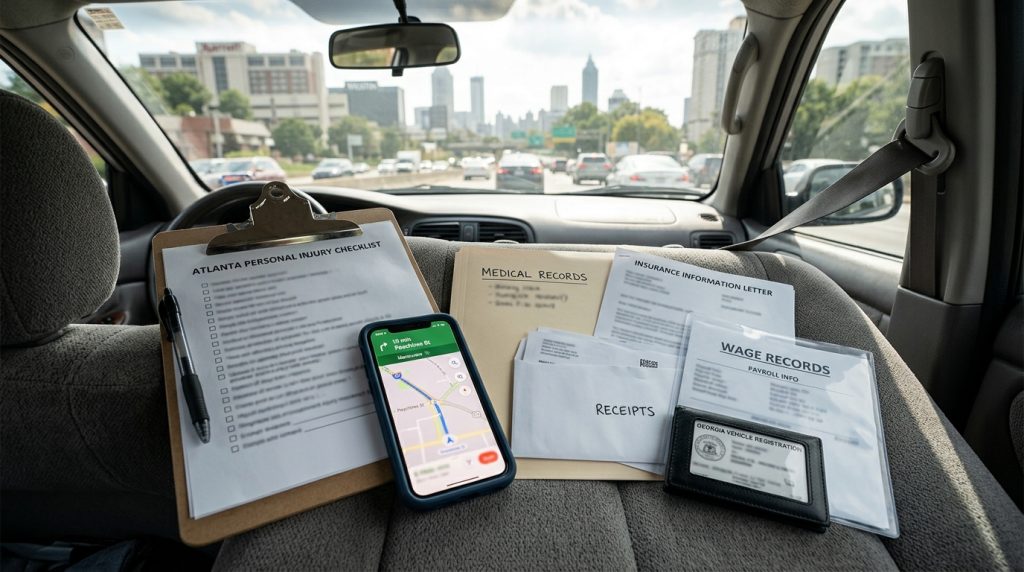
Use this checklist to organize your claim file:
- Medical records
- Medical bills
- Prescription receipts
- Discharge instructions
- Work restriction notes
- Police or incident report number
- Scene photos and videos
- Injury photos
- Witness names and phone numbers
- Insurance claim numbers
- Adjuster contact details
- Insurance letters and emails
- Repair estimates
- Rental car receipts
- Towing or storage receipts
- Proof of missed work
- Out-of-pocket expense receipts
- Recovery journal notes
- Settlement offers
- Legal deadline notes
FAQ
Personal injury resources are records, tools, and information that help injured people organize a potential claim. They may include medical records, accident reports, photos, witness details, insurance letters, wage records, receipts, and deadline information.
Save medical records, bills, photos, report numbers, witness information, insurance messages, repair estimates, receipts, proof of missed work, and notes about symptoms or daily limitations.
Medical records help show what injuries were diagnosed, when symptoms began, what treatment was recommended, and whether the injury may require future care.
You may need to provide basic facts, but be careful with recorded statements, broad medical authorizations, or settlement discussions before you understand the full impact of the injury.
Delayed symptoms can happen after an accident. Seek medical care and explain when the accident happened and when symptoms began. Documentation can be important if a claim is later made.
Possibly. Georgia fault rules can reduce or bar recovery depending on responsibility. Evidence is especially important when fault is disputed.
In many Georgia personal injury cases, the general deadline is two years from the date the right of action accrues. Some cases may involve shorter notice rules or different deadlines, so it is important to review the facts early.
Not without understanding the full value of the claim. Early offers may not include future medical care, lost earning ability, long-term pain, or complications that appear after the offer.
No. This article is for general informational purposes only. Anyone dealing with a specific injury claim should speak with a qualified legal professional about their situation.
Final Thoughts
An Atlanta personal injury claim can involve medical care, insurance communication, evidence preservation, missed work, expenses, and legal deadlines. The process becomes easier to manage when records are organized early.
The most important steps are to protect your health, document what happened, save evidence, track losses, communicate carefully with insurers, and ask about deadlines before too much time passes.