
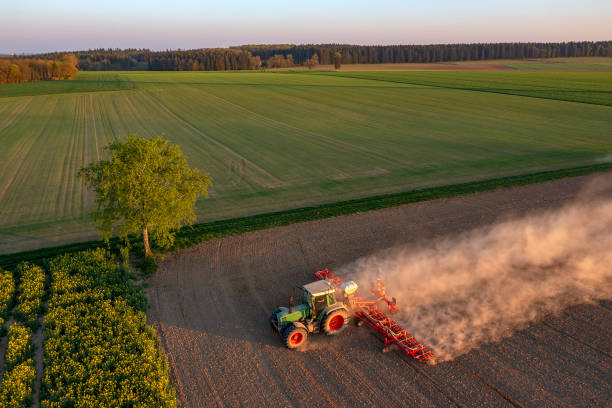

The modern agricultural sector is undergoing an unprecedented technological revolution. Facing the combined pressures of rapid population growth, climate volatility, and shrinking labor pools, traditional farming methods are being replaced by highly engineered, data-driven systems. Addressing these modern challenges requires a continuous exchange of ideas among mechanical engineers, software developers, and crop scientists. Within academic literature, the primary engine driving this global dialogue is Nongye Jixie Xuebao—known internationally as the Transactions of the Chinese Society of Agricultural Machinery.
As a top-tier, peer-reviewed international publication, this journal serves as the definitive bridge between laboratory-scale mechanical theories and automated field operations. For decades, it has remained a trusted resource for academics, engineers, and researchers seeking to publish high-impact scholarly articles that push the boundaries of agricultural engineering.
A Rich History of Agricultural Innovation
The authority of Nongye Jixie Xuebao is built on a rich history of scientific dedication. Founded in 1957, the journal was established during a period when agricultural mechanization was transitioning from basic manual tools to early industrial equipment. The publication is sponsored by the Chinese Society of Agricultural Machinery (CSAM) and co-sponsored by the Chinese Academy of Agricultural Mechanization Sciences (CAAMS), ensuring a deep connection with both academic research and manufacturing fields.
Over the years, the journal has evolved alongside the digital transformation of farming. It has consistently adapted its editorial focus to capture the shift from internal combustion tractors to satellite-guided autonomous fleets and precision robotics. Today, it is recognized as a T1-level journal—representing the highest tier of publishing excellence—within the Hierarchical Catalogue of High-Quality Scientific and Technological Journals in the Field of Agriculture and Forestry by the China Association for Science and Technology.
Journal Scope and Key Research Disciplines
Modern agricultural machinery research cannot exist in a vacuum. The Transactions of the Chinese Society of Agricultural Machinery addresses this reality by maintaining a broad, multidisciplinary scope that crosses traditional engineering boundaries. Key research areas include:
Intelligent Farm Machinery and Agricultural Robotics
As automated equipment becomes a baseline requirement for commercial operations, mechanical systems must grow smarter. The journal regularly features groundbreaking papers focused on:
- Autonomous navigation algorithms, unmanned ground vehicles (UGVs), and GPS-guided harvesting equipment.
- Robotic vision systems, laser-guided weeding mechanisms, and precision fruit-picking arms.
- Structural optimization, finite element analysis, and stress testing of heavy-duty tillage implements.
Precision Agriculture and Agricultural Information Technology
Data is the lifeblood of sustainable crop management. The journal serves as a premier venue for publishing innovations in smart sensor design and industrial data tracking:
- Remote Sensing Frameworks: Utilizing low-altitude drone imaging and satellite data arrays to calculate vegetation indices, detect moisture stresses, and map soil compositions.
- Internet of Things (IoT) Integration: Deploying real-time telemetry sensor networks across open fields to dynamically control localized irrigation and chemical applications.
- Machine Learning Applications: Applying deep neural networks to predict crop yields, automate plant disease diagnoses, and minimize raw fertilizer waste.
Conservation, Resources, and Biomass Engineering
Protecting agricultural ecosystems requires intensive engineering controls. The publication highlights studies in advanced irrigation engineering, soil dynamics, and drainage architectures. Furthermore, it supports renewable energy research by dedicating space to biomass engineering—including high-efficiency bio-gas extraction, crop residue conversion, and clean biofuel manufacturing.

Maintaining Rigorous Peer-Review and Editorial Standards
The long-standing credibility of Nongye Jixie Xuebao rests on its commitment to strict publication metrics and academic transparency. To ensure that only original, high-quality, and reproducible studies are printed, the journal operates an uncompromising double-blind peer-review system. This approach protects the intellectual property of authors and prevents personal, geographic, or institutional bias from affecting the evaluation.
The manuscript selection pipeline follows a clear and thorough workflow:
- Initial Triage: Screening for formatting, scope, and structural clarity.
- Anti-Plagiarism Check: Text cross-checking using advanced global databases.
- Double-Blind Review: Rigorous evaluation by independent external experts.
- Final Selection: Editorial board synthesis for approval or data revision.
This rapid yet thorough evaluation workflow ensures that authors receive actionable, constructive critiques from veteran engineering editors within reasonable timelines. Once approved, papers are quickly pushed into production for global open-access indexing.
Impact on Global Agricultural Mechanization
The ultimate goal of the research published in Nongye Jixie Xuebao is practical industrial implementation. Rather than hosting abstract concepts that remain inside the laboratory, the journal focuses on research that solves real-world agricultural engineering issues.
For example, recent issues of the journal have featured breakthroughs in:
- Aerial Spraying Technologies: Optimizing droplet deposition and flight parameters for agricultural unmanned aerial vehicles (UAVs) to reduce chemical waste and protect ecosystems.
- Full-Mechanization Production: Streamlining automated harvesting and residual crop recovery devices to improve yield processing in cotton and grain production.
- Post-Harvest Processing & Safety: Improving structural systems for agro-product sorting, food preservation, and automatic freshness testing.
By detailing the exact experimental methods and mathematical models behind these devices, the journal provides engineers and manufacturers with the blueprints needed to build the next generation of industrial farm machinery.
Benefits for Authors, Researchers, and Academic Institutions
Choosing Nongye Jixie Xuebao as your target journal yields distinct professional benefits:
- Open-Access Distribution: Operating as an open-access platform ensures that field engineers and researchers worldwide can access and cite your work for free, expanding its real-world impact.
- Bridging Theory and Practice: The journal’s reader base includes both academic theorists and practical machinery designers, which accelerates corporate funding and commercial partnership opportunities.
- Intellectual Security: Submitting through the official institutional portal guarantees that your research copyrights are protected and properly archived within legitimate university databases.
Submission Guidelines and Editorial Process
To ensure a smooth editorial process, authors must adhere strictly to the preparation criteria outlined by the journal:
- Template Compliance: All manuscripts must use the official document template provided by the editorial office. Submissions with incorrect formatting are rejected at the preliminary screening stage.
- Data Verification: Papers must include high-resolution technical schematics, clear mathematical proofs, and clean empirical datasets.
- Secure Access: Authors must handle all manuscript submissions, author agreement forms, and revision uploads exclusively through the secure home portal at https://www.nyjxxb.com/. Avoiding unverified third-party platforms protects your research from fraudulent copycat websites.
Conclusion
The discipline of agricultural engineering is critical to building a sustainable, food-secure future. Through its rigorous review standards, broad multidisciplinary scope, and deep international indexing, Nongye Jixie Xuebao continues to provide an unparalleled platform for research innovation. By successfully connecting laboratory discoveries with commercial machinery manufacturing, the journal empowers the global research community to engineer a smarter, cleaner world.
Are you ready to elevate your academic profile and share your latest precision farming or mechanical engineering breakthroughs with the world? Visit the official platform of the Transactions of the Chinese Society of Agricultural Machinery to review the updated submission guidelines, download the manuscript template, and submit your paper for evaluation today!
Frequently Asked Questions (FAQs)
1. What is the relationship between Nongye Jixie Xuebao and the Transactions of the Chinese Society of Agricultural Machinery?
They are the exact same academic journal. Nongye Jixie Xuebao (农业机械学报) is the official Chinese name, while Transactions of the Chinese Society of Agricultural Machinery is the internationally recognized English title for this peer-reviewed publication.
2. Is this journal indexed in Scopus and EI Compendex?
Yes. The legitimate version of the journal is actively indexed in major international databases, including EI Compendex (Core Edition), Scopus, Chemical Abstracts (CA), CAB Abstracts, and the Chinese Science Citation Database (CSCD).
3. What research domains are covered by the journal?
The journal welcomes original research papers across a wide engineering spectrum, including intelligent agricultural machinery, agricultural robotics, remote sensing, precision farming technologies, water and soil engineering, biomass energy, and agro-product post-harvest processing.
4. How long does the review and publication cycle take?
The journal operates an efficient review workflow. The average timeline for an initial editorial decision is approximately 20 days. Following formal acceptance, the median time to online publication is about 30 days.
5. Is the journal open access?
Yes. It functions as a monthly open-access publication. This ensures that all published engineering papers are freely available to readers globally, maximizing citation potential and international impact.
6. Where should I submit my manuscript to avoid fraudulent websites?
Authors must process all submissions, review tasks, and manuscript tracking exclusively through the verified, secure institutional website at https://www.nyjxxb.com/. Avoid third-party sites that promise guaranteed acceptance without a double-blind peer review.