
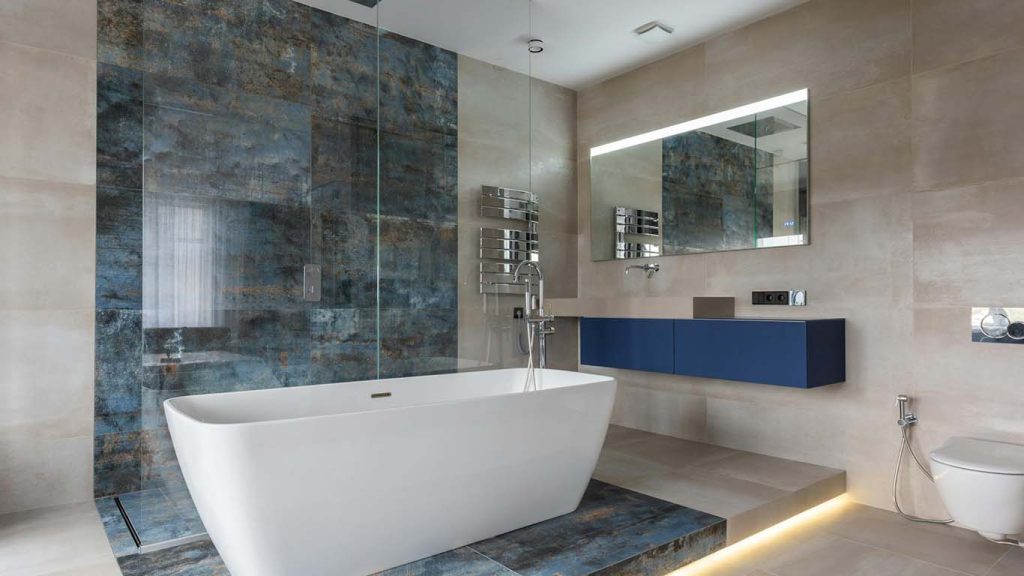

Renovation of the bathroom should make special considerations on materials that come into direct contact with moisture every day. Tubs and showers are enclosed by walls that are in constant contact with water and temperature, respectively. Badly selected walls are known to create problems in the long run maintenance and structural issues.
Problems with wall protection systems when it comes to renovation failures can be traced back to many. When choosing tub and shower wall panels, one has to know longevity, accuracy in installation, and water resistance.
The advantage of homeowners is assessing performance as opposed to image only. Framing, insulation and plumbing infrastructure is securely enclosed by walls. Poor materials reduce the renovation durations severely. Learned planning prevents the repetition of repairs costs.
Moisture Control Demands
Tub and shower enclosures have the problem of moisture management. Walls should be resistant to water intrusion on a regular and consistent basis. Even small leaks will destroy substrates in the long run.
Stagnant water provides an environment of mold and mildew. Good systems will offer constant waterproofing. Seams are the most susceptible of the areas that are exposed over a long period.
Less-jointed materials minimize the effects of failures. Vapor resistance aids in stability of walls in the long run. Durability has to do with keeping the structure intact. It is cheaper to prevent instead of cure.
Stability Of Structural Material
Wet performance and life stability are influenced by the stability of materials. The non-porous surfaces do not swell and deteriorate readily. High density materials are those that do not change shape with change in temperature.
Materials of low-quality break or bend due to constant usage. The surface finishes should be able to withstand cleaning reagents. Homogenous production enhances uniformity of strengths.
Mounted accessories are secure on structural rigidity. Hardened materials minimize the rate of replacement. Stability is an added long-term value. The quality of the material is more important than ornamentation.
It Is Accurate As Far As Installation Methods Are Concerned
Walls systems are defined by the quality of their installation which determines their performance. The substrates should be dry, even, and smooth. Poor preparation causes stress in back of panels.
Proper sealing prevents leakages of joints and penetrations. Shower walls and tub walls are installed correctly forming a waterproof enclosure. Installation instructions of manufacturers should be adhered to accurately.
Mistakes undermine the warranty and reduce the life of service. The professionally installed reduces the future risks of remediation. Proper coordination enhances performance and image. Precision safeguards the complete assembly of the bathroom.
Continued Maintenance Feasibility
The maintenance needs prefer a day-to-day use and cleanliness norms. Polished walls will make cleaning practices much easier. Less seams restricts space of mold. Durable finishes are chemical resistant and will not be damaged by regular cleaners.
Leaky materials will require heavy scrubbing and maintenance. Walls that need little maintenance promote constant cleaning. Saving of time helps in the busy schedules of the house.
Durable finishes maintain the same image in the long run. Efficiency in maintenance reduces the costs of ownership. Workable maintenance enhances satisfaction in the long term.
Design Compatibility Planning
The shower and tub panel walls should be very compatible with tubs, fixtures and trims. Thickness has implications on edge alignment and plumbing transitions. Incompatible is manifested in visible gaps and inconsistencies.
Impartial designs allow the ability to update them later. Overly ambitious designs restrict flexibility of design. The location of seams influences the visual flow on surfaces. Proportions of equal size enhance comfort in small bathrooms.
Co-ordinated finishes improve the perception of quality. The compatibility planning does not allow further preparations. Sustainable design is facilitated by functional integration.
Conclusion
Wall systems are very important in hygiene and durability of the bathroom. The most necessary performance requirement is moisture protection. Daily exposure is resistant with the help of stable materials. Recording of the factual installation eliminates latent damage.
A maintenance that can be managed is helpful in maintaining cleanliness and convenience. Design compatibility enhances the long-term use. Decisions that are performance-oriented safeguard investment value.
Material evaluation is informed to the advantage of the homeowner. High quality wall systems occupy consistent bathroom functionality. Careful planning is a guarantee of reliable outcomes in the long run.