

If you’ve ever packed ice into a soft cooler bag and found warm water by noon, you’re not alone.
The embark cooler bag gets a lot of attention as an affordable, everyday option – but does it actually hold ice when the heat hits 80, 90, or even 100°F?
Here’s what the numbers say, and what actually makes the difference between ice that lasts and ice that doesn’t.
How Long Does the Embark Cooler Bag Keep Ice?
Short answer: around 24 hours at 80°F, 12–18 hours at 90°F, and roughly 6–10 hours at 100°F – but that’s with the bag used correctly.
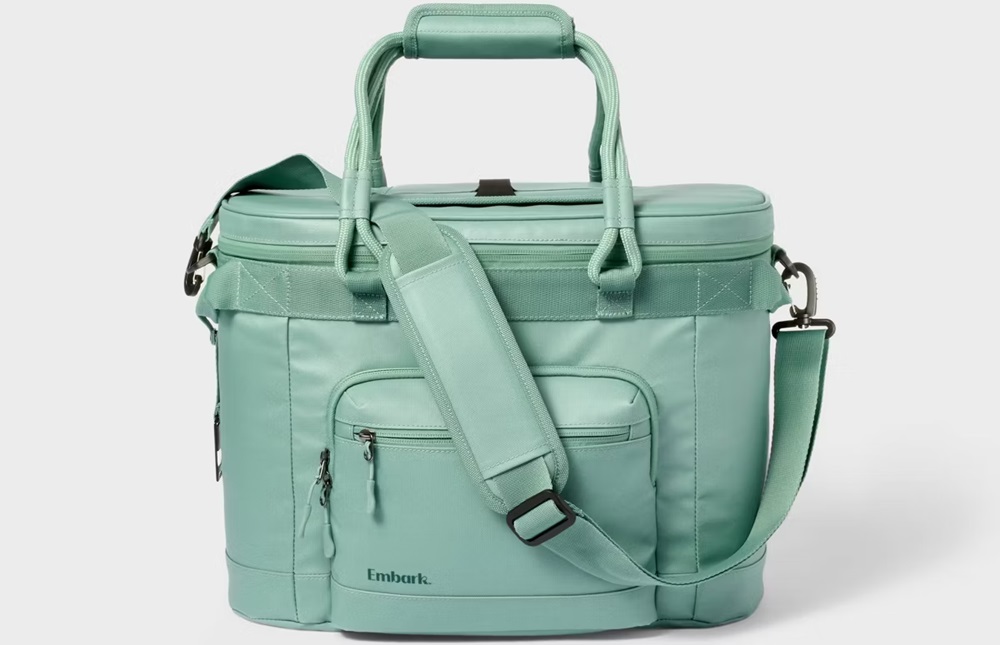
The embark cooler bag is a soft-sided cooler with a heat-sealed, leak-proof liner made from recycled polyester. The soft-sided version comes with a double zipper, 30+ can capacity, an access hatch, and a heat-sealed, leak-proof liner – which is actually a meaningful construction feature.
Heat-sealed liners reduce the micro-leak points you get with stitched seams, and that matters a lot for cold retention.
That said, the Embark sits in the budget-to-mid-range tier. Bags built with 5mm foam and an aluminum liner can extend ice retention to 8–12 hours, while bags with 8mm foam and sealed zippers can maintain internal temperature for 12 to 24 hours.
The Embark’s foam thickness isn’t officially published, but based on its price point (around $25–$35) and build, it falls closer to the 5mm range.
One real-world test of a similar Target Embark soft-sided cooler found that with eight frozen water bottles inside, and house temps ranging from 65°F at night to 93°F during the day, roughly 40–50% of the ice remained after two full days – with all ice gone by day four.
That result held in a mostly controlled indoor setting. Outdoors in direct heat, you can expect significantly faster melt.
What Affects Ice Retention the Most?
Three things kill your ice faster than anything else: direct sunlight, warm contents, and opening the bag too often.
A cooler bag doesn’t create cold – it slows heat from entering. Performance is mainly decided by insulation thickness, seam and zipper sealing, liner construction, how much cold mass you load, and how often you open it.
There are three ways heat attacks the inside of your cooler:
Conduction – heat moves through the bag’s materials from outside to inside. Thicker foam slows this down.
Convection – warm air flows in through gaps, zippers, and stitching holes every time you open the bag. This is often the biggest culprit.
Radiation – direct sunlight heats the exterior surface fast. A bag with decent foam but a leaky zipper can lose cold faster than you’d expect.
Every 10°F increase in external temperature can shorten ice retention by one to two days. A cooler left in 100°F sun will melt ice roughly twice as fast as one kept in 80°F shade.
How Does the Embark Compare at 80°F vs. 90°F vs. 100°F?
Each 10-degree jump in temperature hits harder than it sounds – here’s what actually changes.
At 80°F, the Embark performs reasonably well for a budget cooler. If you pre-chill the bag, pack it tight with ice, and keep it out of direct sun, most users report cold contents for a full day. In field tests at around 80°F, even a budget-tier soft cooler left in a car for a full day still had ice and felt cold. That’s a good benchmark for what you can expect from the Embark in similar conditions.
At 90°F, things start to change noticeably. The gap between a well-insulated premium cooler and a budget option widens here. In one ice retention test at 90°F in direct sunlight, a premium soft cooler held ice for more than 10 hours, with half still frozen nearly 24 hours later. The Embark won’t match that – but in the shade with minimal openings, you’re still looking at 12 hours or more.
At 100°F, you’re in survival mode for any soft cooler. High-performance soft-sided coolers can hold ice for up to three full days at 100°F, but those are premium builds with thick foam and near-perfect seals. The Embark at 100°F is better suited to a beach day than an overnight trip.
How to Get More Ice Life From the Embark Cooler Bag
A few small habits can add several hours of cold time – you don’t need a premium cooler for that.
Pre-chill the bag first. Toss in a sacrificial bag of ice 30–60 minutes before packing your real stuff. This brings the liner temperature down and dramatically reduces how fast your main ice melts.
Use block ice instead of cubes. Block ice melts significantly slower than cubed ice because it has less surface area exposed to warm air. When cubes aren’t avoidable, mix in reusable ice packs. Adding ice packs on top of base ice can extend retention by 12–36 additional hours, depending on the pack quality and size.
Pack it full. Empty air space inside the bag is basically dead space that heats up fast. Fill gaps with extra ice packs, towels, or crumpled newspaper to reduce the amount of warm air sitting inside.
Keep it in the shade. This one sounds obvious but it makes a measurable difference. Keeping a cooler shaded versus in direct sun can extend ice life by one to two days.
Don’t open it unless you need to. Every time you unzip the bag, you let in a fresh wave of warm air. Decide what you want before you open it.
Is the Embark Cooler Bag Worth It?
For a day trip or a few hours outside, yes. For multi-day camping in serious heat, probably not.
At $25–$35, the embark cooler bag is genuinely solid for what it costs. In comparative testing of sub-$100 cooler bags in summer heat ranging from 76 to 93°F, well-built soft-sided coolers kept ice for 24 to 45 hours – and the Embark lands on the lower end of that spectrum. It’s not a premium performer, but it’s not supposed to be.
If your use case is beach days, picnics, road trips, or backyard cookouts, the Embark handles it fine with the right packing habits. If you’re camping in triple-digit heat and need ice for 48-plus hours, you’d want to step up to a heavier-insulated option.
FAQs
How many hours does the Embark cooler bag keep ice at 90°F?
At 90°F in the shade with minimal openings, you can expect ice to last roughly 12–18 hours. In direct sunlight or with frequent openings, that drops to six to ten hours.
Does the Embark cooler bag work for keeping food cold overnight?
At mild temperatures (around 70–75°F), yes – especially if the bag is fully packed and pre-chilled. At 90°F or above, food safety becomes a concern after eight to twelve hours. The FDA recommends keeping perishables at or below 40°F, so if you’re camping in summer heat, add plenty of ice packs.
Does opening the bag often really affect ice retention?
More than most people realize. Every opening lets in a rush of warm air and pushes cold air out. In 90°F+ heat, frequent openings can cut your ice life in half compared to keeping it closed.
What type of ice lasts longest in the Embark cooler bag?
Block ice lasts longer than cubed because it melts slower. Frozen water bottles are a solid middle ground – they melt slowly and keep your drinks from getting soggy. Ice packs added on top of regular ice can extend total cold time by several hours.
Can I use the Embark cooler bag as a daily work cooler?
Yes, for short daily use it works well. Packed with ice packs and pre-chilled food, it keeps lunch cold for a standard eight-hour workday at most office temperatures. It’s one of the better practical uses for the embark cooler bag.